
We'll Always Have Indy
Self-Recognition in the Archives

This post is in loving memory of my Uncle Charlie: for his wit, his care, and his unstinting gift of acceptance.
“The Archives” (capitalized, in bold, and several font sizes larger than everything else) are a kind of mythologized place for historical researchers, much like “The Field” is a mythologized destination for many ethnographic researchers. Archives loom large in the imagination of many junior scholars, conjuring up images of silent, temperature- and humidity-controlled fortresses of knowledge, or the dusty back rooms of government offices. “When I get into the archive,” or, “When I finally get to go do my fieldwork,” are comforting promises of the ways in which one’s future endeavors will be a panacea to all one’s current woes. We’re there looking for The Document, or The Image, or The Thing that will be both smoking gun and silver bullet for our research.
Of course, we all know this isn’t really how archives (or field research) work. There are no silver bullets, and smoking guns are few and far between. In reality, far from unearthing the unknown or the hitherto unrecognized from archives, we often find ourselves gazing at oddly refracted snippets of our own lives. These moments of self-recognition are all the more surprising given that they tend to show up where least expected.
Whither Archives?
I’m not a trained historian. Anyone who happens to be, don’t @ me. But the term “archives” used to conjure in my head images of Vestal defenders of knowledge carefully meting out revelatory tracts to humble supplicants who come to pore over unique documentary treasures in gently lit temples of knowledge.
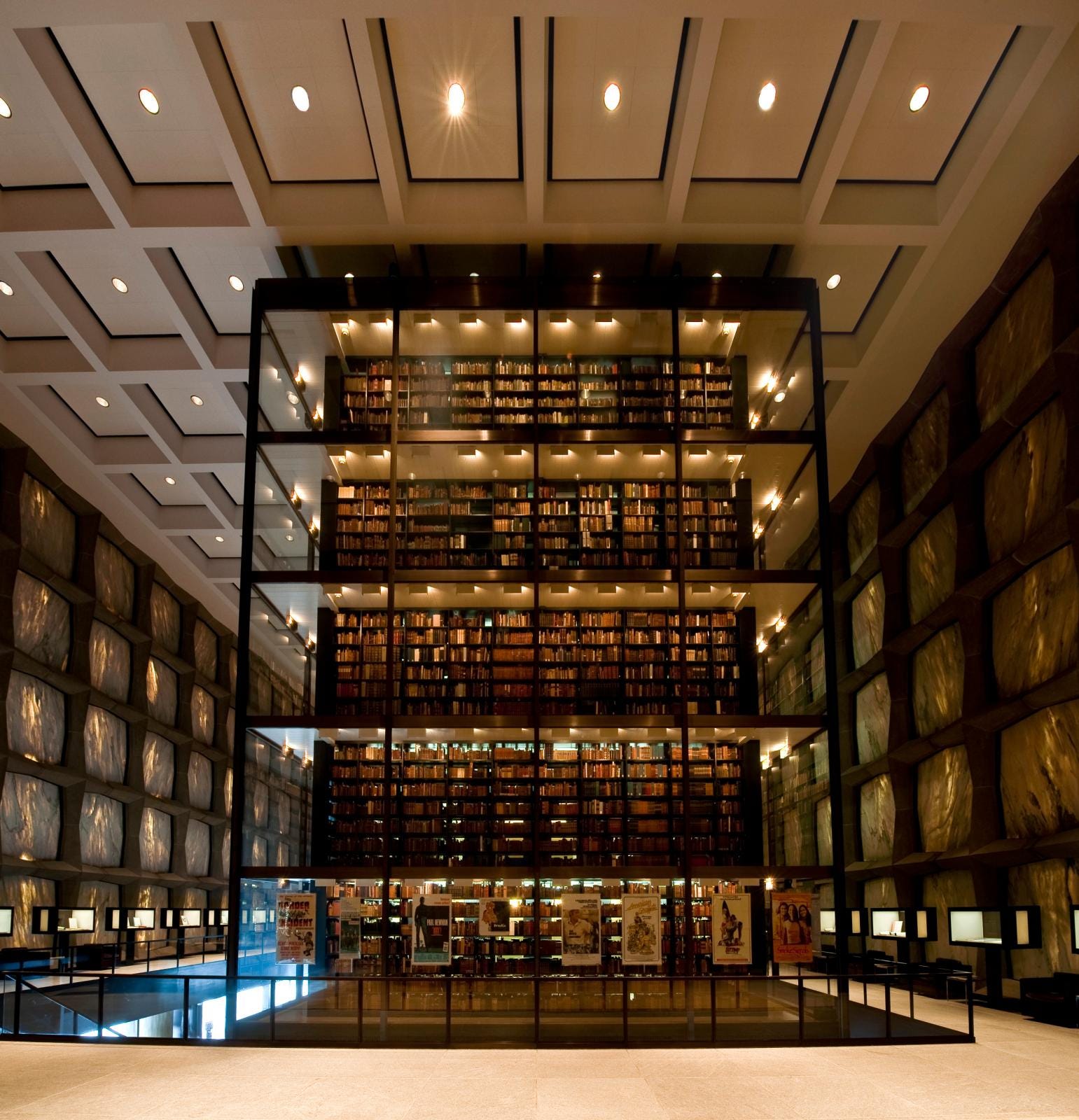
In fact, in my experience, archivists tend to err more in the direction of tattoos, a good pint after work, and general bad-assery, rather than Vestal sanctity; the humble supplicants are (unfortunately) scholars, meaning that it’s roughly even odds as to whether you’ll find humility, delusions of grandeur, or crushing self-doubt; and any reading that happens is usually under the less-than-sacral glare of fluorescent lights that were probably installed as part of some government cost-cutting scheme in the 1970s.
This is assuming, of course, that you even “go to an archive.” Recent work by scholars like Lisa Gitelman has enriched the way we think about the entire genre of “documents.” In her book Paper Knowledge, Gitelman is less concerned with what’s in documents than with what they’re on. How do the forms, tickets, and slips of modern record keeping structure and/or limit the way we organize, process, and think about information?1 (Anyone with a hyphenated last name who has been confronted with a “Letters only” error when buying a plane ticket, or whose name is too long for the 13-odd spaces on government forms, or who has watched the Little Britain “Computer says no” skit should be able to intuitively understand the ways in which documents fundamentally determine which information is legible, and which is not.) These are the kinds of mundane records that form an archive without ever requiring us to go to The Archive.
Then there’s the question of archives that don’t leave traces, or whose traces are not traditionally recognized as archives. Diana Taylor talks about how performance becomes both a form of embodied knowledge and a means of identity transmission in Latinx communities.2 Anna Maria Ochoa Gautier gives a devastating account of how the Spanish colonizers of Colombia systematically eliminated the epistemic validity of all forms of knowledge that could not (or would not) be recorded as text.3 And of course, this doesn’t even scratch the surface of the protean landscape of Twitter, YouTube, Facebook, and all the digital spaces where social interactions can appear and disappear, where ideological screeds can be edited and amended, all in a matter of seconds. (Hot tip: screenshot everything.)
Even if you’re still dealing with the kind of crumbling document that fusty archival dreams are made of, you still might not “go to an archive.” For example, one of my more productive archives since arriving in Taiwan was … well, see for yourself:
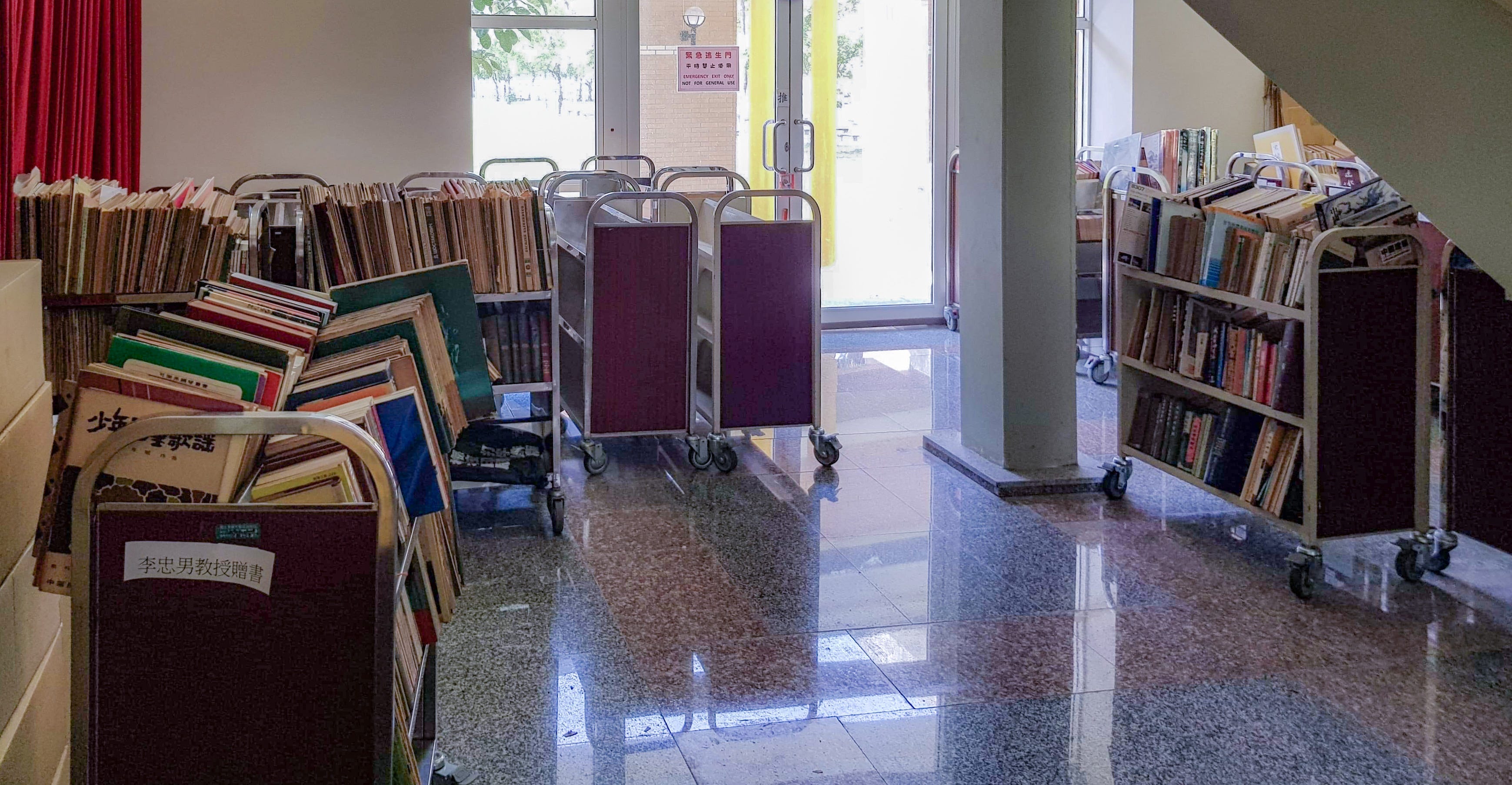
This is a collection of magazines, scores, old concert programs, and even a couple of decades-old electricity bills of a retired professor here in Taiwan. There’s some great stuff in here, but there’s no ritual of request and retrieval, or solemn vow about what one shall and shall not do in the presence of these materials. There isn’t even an index or finding aid. Is it “The Archive”? Heck if I know. But it’s good enough for me.
Whence Indy?
This is all getting a bit heady. I promised Indianapolis, and Indianapolis you shall receive.
Picture the scene: I was in “The Archive,” looking for the hitherto-unknown silver bullet/smoking gun upon which my entire scholarly reputation will rest in perpetuity. (Translation: I was in a library stairwell photographing some old magazines.)
Now, in a single day, I usually can photograph anywhere from 1,500-4,000 pages. At that speed, I’m not exactly giving this information a detailed read. But there are still things that jump out in between shutter clicks.
In this case, what jumped out at me was the back cover of the Taiwanese journal Music Magazine 音樂雜誌 from 1958. On it is what appears to be a large Chinese orchestra (that is to say, a guoyue orchestra of the kind I talked about a while back) playing in front of a backdrop that very distinctly says “Musical Salute to the City of Indianapolis, U.S.A.”4
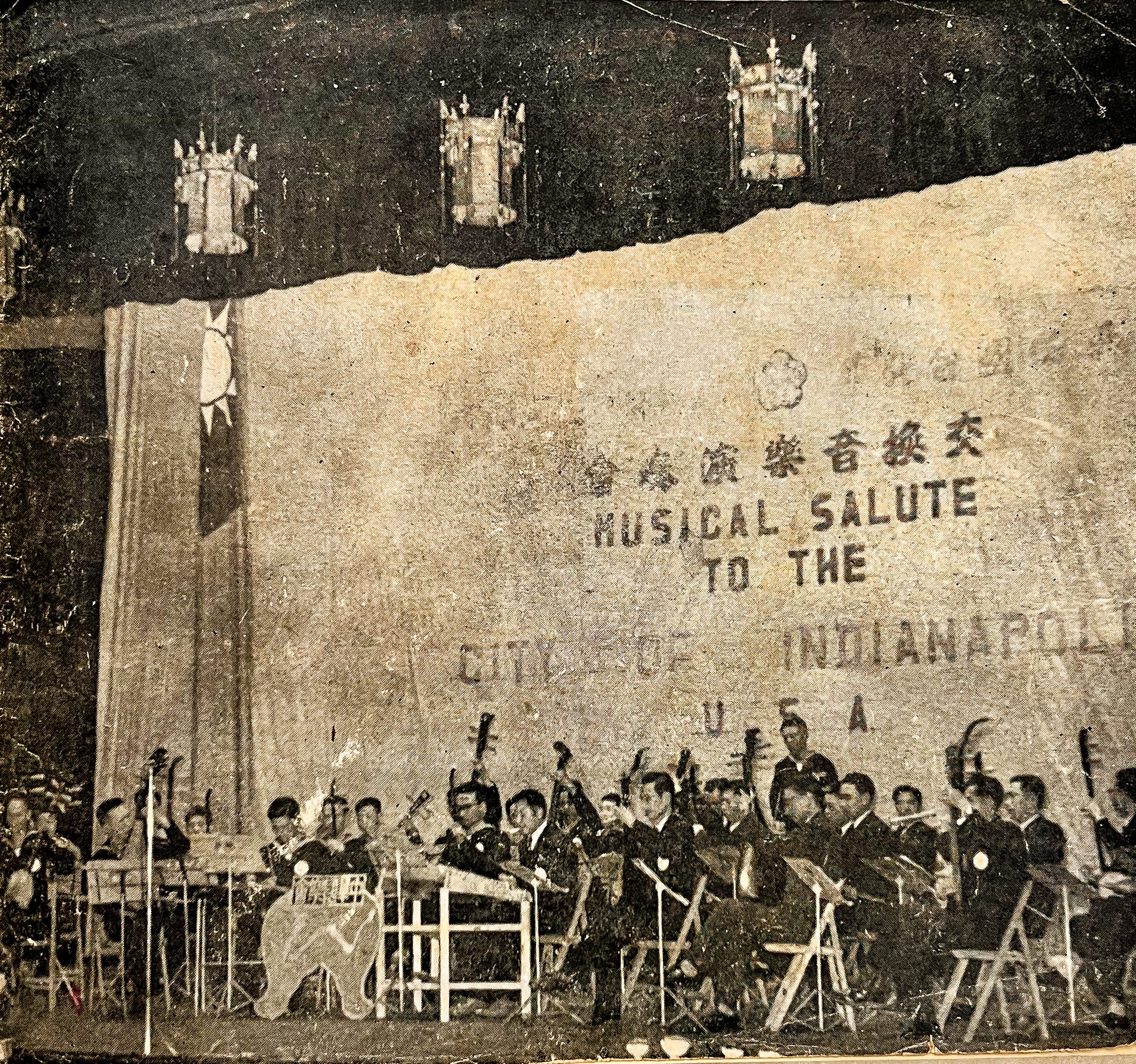
Quoi?!
Now, my research focuses a lot on state-level actions—what are the governments, political parties, and officials of China and Taiwan up to at any given moment? If I’m honest, Indianapolis is not the primary site that I would normally go looking for this information.
That’s not to say I have no associations with Indianapolis. The last time I was there was for my cousin’s gorgeous wedding at the truly spectacular Indianapolis Public Library (archives again!) Even more, as the weird, bookish queer kid that no one ever quite knew what to do with, I have warm memories of visiting my aunt, uncle, and cousins about an hour away from Indy. When visiting with the family, my uncle Charlie always took my weirdness in stride with a quip, a joke, or just outright agreement. And when I attended school (for a day? a week?) with my cousins, other kids’ bafflement that I didn’t know the Pledge of Allegiance was balanced out by my own befuddlement when confronted by the slightly creepy drone of dozens of children chanting in unison while solemnly facing the rather uninspiring edifice of a PA system loudspeaker. As an adult, although I don’t see that side of the family as much as I should, my uncle always remained genuinely curious about and supportive of my personal and professional path. This is a gift of care and acceptance that I will always cherish.
So here I am, deep down a rabbit hole of personal memory when I should be on a question for The Big Answers.
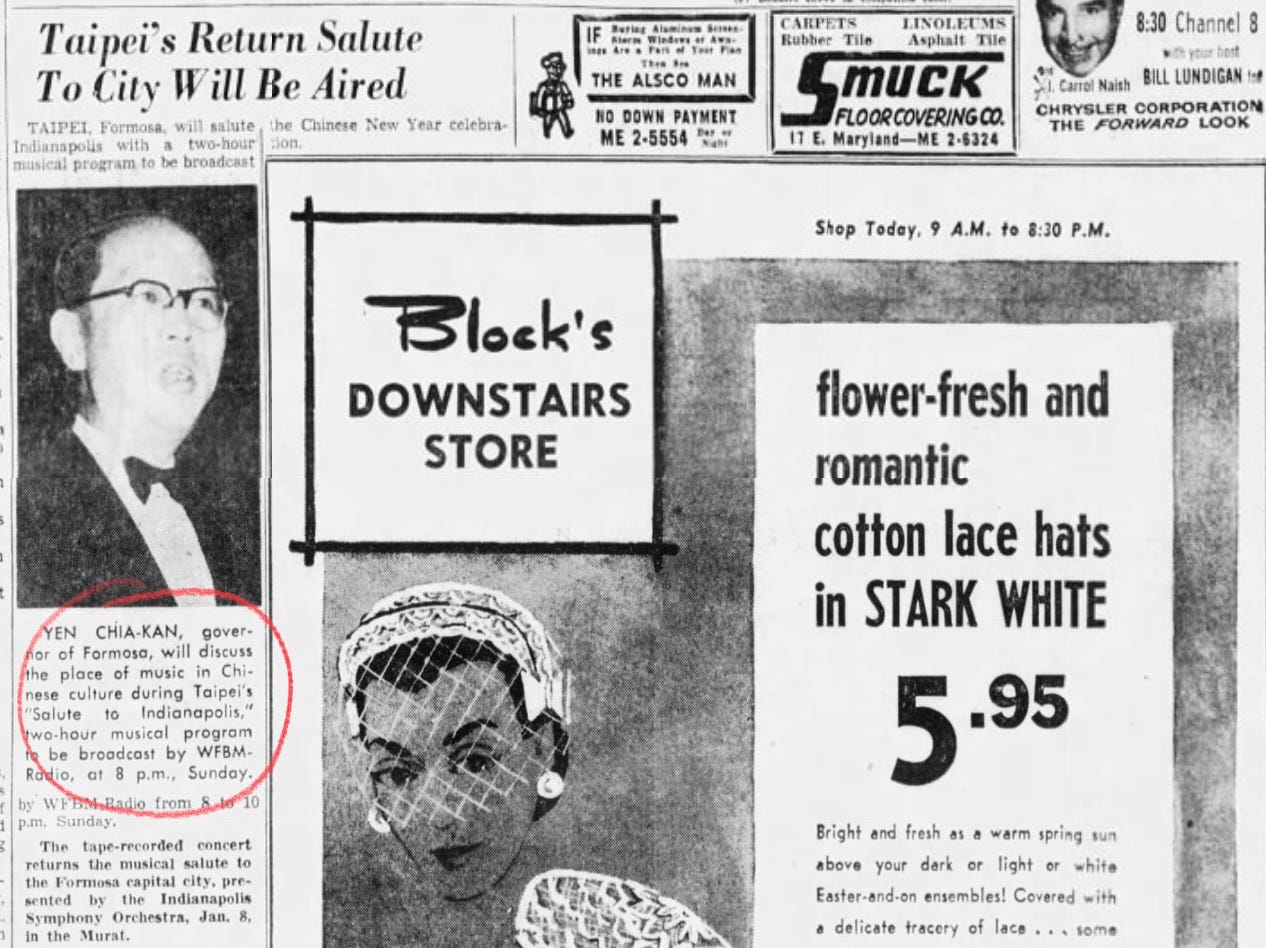
But wait, there’s more! You see, Music Magazine isn’t very forthcoming on why there’s a picture mentioning Indianapolis on their back cover, so I trawled through the digital archives (archives again!) of the Indianapolis Star. It turns out that, on January 8th, 1956, the Indianapolis Symphony performed a “Salute to Taipei, Formosa” which was recorded (live from the Murat, for any Indy folks who are reading) and subsequently “flown to Taipei where it [was] played via a radio station there.”5 The reciprocal “Salute to Indianapolis” was the response by musicians of the recently-founded ensembles in the KMT’s “temporary” capital city.
But a tiny detail in the reporting on the original concert by the Indianapolis Symphony caught my eye. The violin soloist for that concert was Eric Rosenblith. Now, I’ll forgive you for not knowing who he is (although he used to be your symphony’s concertmaster, Indy folks). To be honest, the only reason I know him is because he was the teacher of one of my closest friends during undergrad. As such, much of my undergraduate free time was filled with stories of Rosenblith’s lessons, Rosenblith’s charming accent, or Rosenblith’s many kindnesses.
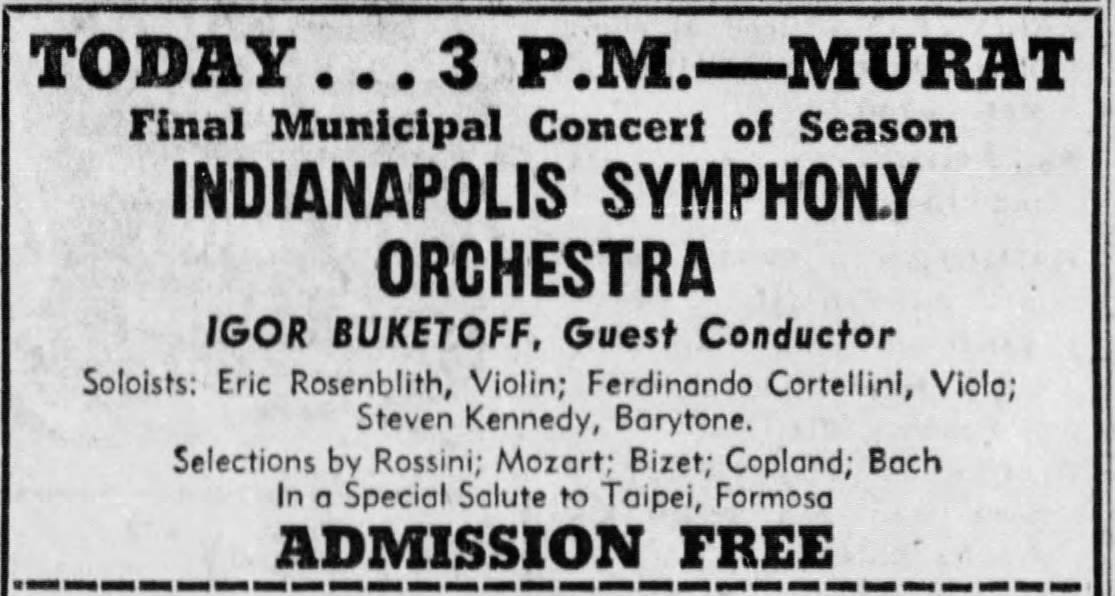
It’s not particularly important, though, why I know (of) Eric Rosenblith, or the reasons I have associations (however tenuous) with Indianapolis. What’s important is that I am here, sitting in contemporary Taipei, toggling between memories of family, articles from 1950s Indianapolis newspapers, and reminiscences of happy times as a young conservatory student. And all of this was sparked by my time in the archives.
What was I looking for again?
Wherefore the Self?
Will any of this make it into my dissertation? Probably not (although if anyone knows how to track down archival recordings from WFBM-Radio so that I can listen to the Taiwanese governor’s pre-concert comments, feel free to chime in!) But when it comes to highly academic, highly niche, highly abstracted academic research, a lot of people (at least, those who don’t immediately glaze over) ask, “So … who cares?”
Honestly, fair enough. Why do I care about some performance from decades ago that few people, if any, remember? Why should I care about the soundtrack to some movie that practically no one watches today? Why should anyone care about the repertoire choices of some KMT propaganda broadcast, Madame Mao’s love of Greta Garbo, or the decor of a small, unglamorous restaurant in Taipei?
This is where the self comes in. Recognizing ourselves in the archive doesn’t just help alleviate the loneliness of research that I’ve confessed to before. It also reminds us that archives provide perspective along with facts. Looked at under normal circumstances, my research in Taiwan, my family connections of to Indianapolis, and my undergraduate life at conservatory are three discrete slivers of my life. But if I stroll through the archive, then stop to view these pieces of my life from a different angle, I realize that they’re not slivers but discs, and that the discs overlap to form a Venn diagram where I would have thought none was possible. The pathway to this viewing angle is made possible by archives.
So the next time someone asks, “Who cares?”, I have an answer.
I do.
See Lisa Gitelman, Paper Knowledge: Toward a Media History of Documents (Durham, NC: Duke University Press, 2014). It’s been a minute since I read this book, so hopefully my soundbite about it isn’t too garbled.
Diana Taylor, The Archive and the Repertoire: Performing Cultural Memory in the Americas (Durham, NC: Duke University Press, 2003).
Anna Maria Ochoa Gautier, Aurality: Listening and Knowledge in Nineteenth-Century Colombia (Durham, NC: Duke University Press, 2014).
Music Magazine 音樂雜志, no. 3, Jan. 1958 (Taipei). From the papers of Lee Chung-Nan.
“Chinese Ambassador to Attend Symphony,” Indianapolis Star, Saturday, 7 January 1956, p. 13.